Code Dx: Vulnerability Management Design
A unified dashboard built to simplify vulnerability analysis, strengthen risk triage, and help Code Dx deliver the clarity that later supported its acquisition by Synopsys.
Client
Code Dx
Role
Product Design
Unifying AppSec Workflows Through Visualization
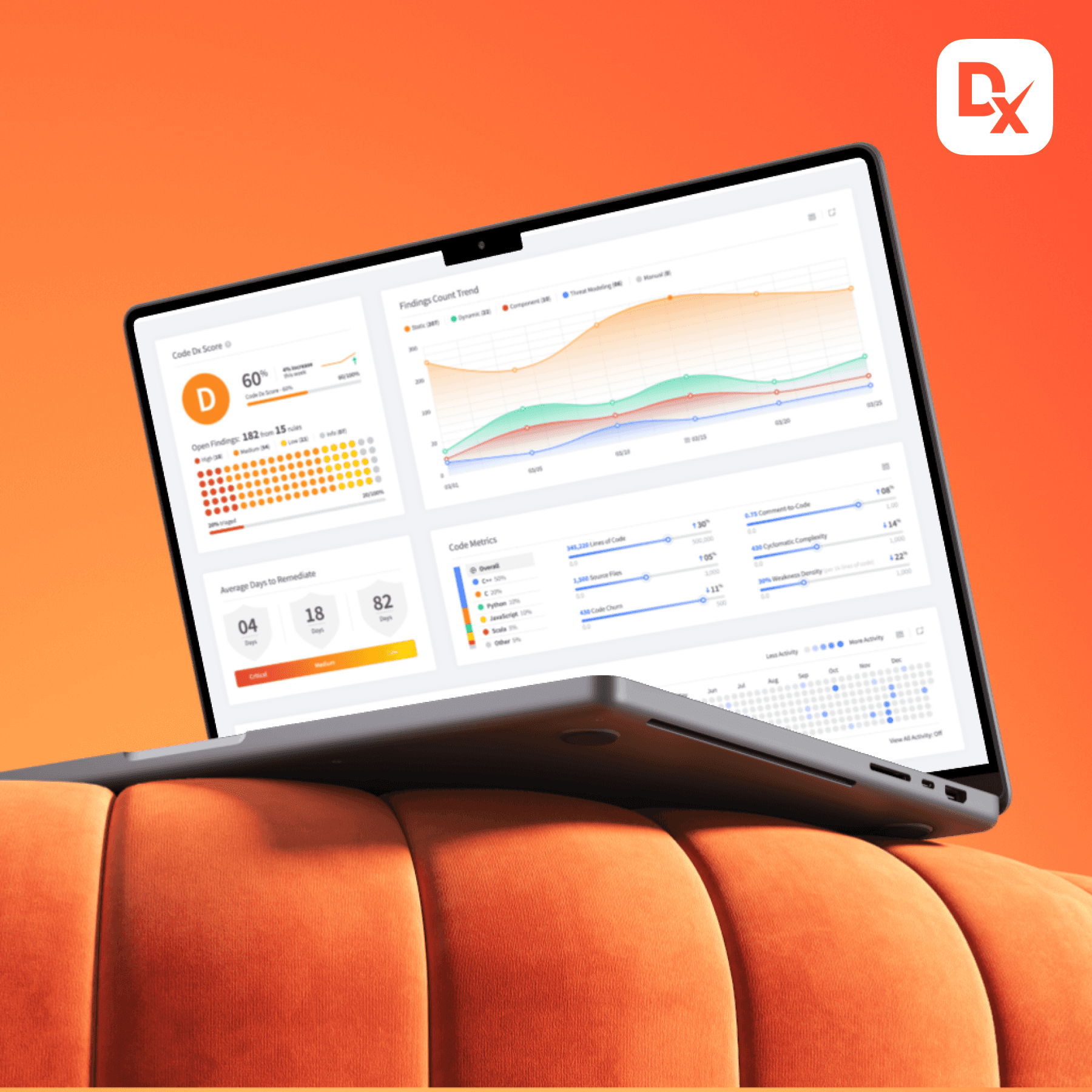
Code Dx aimed to simplify the way security and DevSecOps teams analyze vulnerabilities by bringing dozens of static and dynamic testing results into a single, cohesive interface. Before this work, users were forced to navigate fragmented tools and inconsistent reporting formats that made remediation slow and error-prone. My role was to design the core vulnerability dashboard to help clarify how issues are surfaced, prioritized, and reviewed across an entire codebase. The first step was defining a clean information architecture that helped users move from broad system-level risk down to the exact file, line, or test that triggered a vulnerability. We introduced unified scoring models, filtering controls, and comparison views that brought all findings into the same workflow. The dashboard visualized risk over time, highlighted critical issues, and exposed relationships between scanners so security teams could eliminate duplication and focus on what mattered most. The redesigned vulnerability dashboard dramatically improved the clarity of data and consistency at which it could be scanned for organizations using the platform. Teams saw faster triage cycles, more reliable prioritization, and higher adoption of correlated scans, which contributed to Code Dx’s growth and eventual acquisition by Synopsys. The biggest takeaway from this project was the impact that clear, thoughtful visualization can have in environments where information is dense, high-stakes, and time-sensitive.
Key Takeaways
Reduce vulnerability triage time through clear prioritization and consolidated data scanning
Increased adoption of multi-tool correlation by helping teams eliminate duplicate findings
Improved remediation workflows with intuitive filters, severity cues, and streamlined issue comparison
Recent Designs